Thursday , August 13 2026

How to draw a Manga Page

How to draw a Manga Page

How to draw a Manga Page

How to Draw a Manga Page: A Complete Step-by-Step Guide for Beginners and Aspiring Mangaka

Creating a manga page is more than just drawing characters with big expressive eyes. A great manga page combines storytelling, composition, pacing, emotion, and dynamic artwork into a seamless reading experience. Whether you’re inspired by legendary creators like Osamu Tezuka or modern masters such as Eiichiro Oda, learning how to construct a manga page properly is the foundation of becoming a strong visual storyteller.

This detailed guide will walk you through every step  from concept to final inks  so you can confidently create your own professional-looking manga page.


1. Start with a Strong Concept

Before you even touch a pencil, you need clarity on what your page is about.

Ask yourself:

  • What happens on this page?
  • Who is involved?
  • What emotion should the reader feel?
  • Is this page action-heavy, dialogue-driven, or emotional?

A manga page should serve the larger story. It must move the plot forward, reveal character development, or build tension. Even a quiet slice-of-life moment needs purpose.

Pro Tip:

Write a short summary of the page in one sentence:

“The hero confronts his rival and realizes he has been betrayed.”

This keeps your page focused and prevents unnecessary panels.


2. Script the Page (Even a Simple One)

Professional manga artists always script first. Even a rough script helps structure your storytelling.

Example script format:

Page 1

  1. Wide shot of city at night.
  2. Close-up of protagonist looking worried.
  3. Villain appears behind him.
  4. Dramatic confrontation dialogue.
  5. Shock reaction panel.

This helps you decide how many panels you’ll need and how the pacing should feel.


3. Understand Manga Page Layout and Flow

Unlike Western comics, manga is typically read right to left. That means:

  • The first panel is on the top right.
  • The reader’s eye flows from right to left, top to bottom.

If you’re creating manga for a Japanese-style audience, always keep this reading direction in mind.

Panel Flow Basics

Good manga pages guide the reader’s eye naturally. You can do this by:

  • Angling panels
  • Using character gaze direction
  • Overlapping speech bubbles strategically
  • Using motion lines to guide attention

A confusing layout breaks immersion instantly.


4. Thumbnail Your Page (Very Important Step)

Thumbnailing means drawing tiny rough versions of your page layout before committing to full-size art.

Use small boxes (about 2–3 inches wide) and sketch:

  • Panel placement
  • Character positioning
  • Word balloon placement
  • Major action beats

At this stage:

  • Don’t focus on details.
  • Stick figures are fine.
  • Prioritize composition and storytelling clarity.

Many successful creators sketch multiple versions before choosing the strongest layout.


5. Design Dynamic Panels

Manga often uses cinematic panel design.

Types of Panels

1. Establishing Panel

  • Sets the scene.
  • Often wide and detailed.

2. Medium Shot

  • Focuses on characters interacting.

3. Close-Up

  • Highlights emotion.
  • Very powerful in dramatic scenes.

4. Extreme Close-Up

  • Eyes, hands, sweat, tears.
  • Creates tension.

5. Splash Panel

  • A large panel that dominates the page.
  • Used for dramatic reveals or powerful action moments.

Study action-heavy series like Attack on Titan or adventure epics like One Piece to see how panel variety keeps pages visually exciting.


6. Sketch the Rough Draft (Pencils Stage)

Now move to full-size paper (typically B4 for traditional manga).

What to Focus On:

  • Correct anatomy
  • Clear expressions
  • Proper perspective
  • Balanced composition
  • Speech bubble placement

Keep the lines light. This is still a draft.

Anatomy Tip:

Exaggeration is common in manga, but structure matters. Even stylized characters need believable proportions.


7. Add Backgrounds and Perspective

Backgrounds ground your characters in reality.

You don’t need ultra-detailed backgrounds in every panel. Instead:

  • Use detailed backgrounds in establishing shots.
  • Use minimal or speed-line backgrounds for emotional or action moments.
  • Use screentone or gradients for mood.

Learning one-point and two-point perspective dramatically improves your page quality.


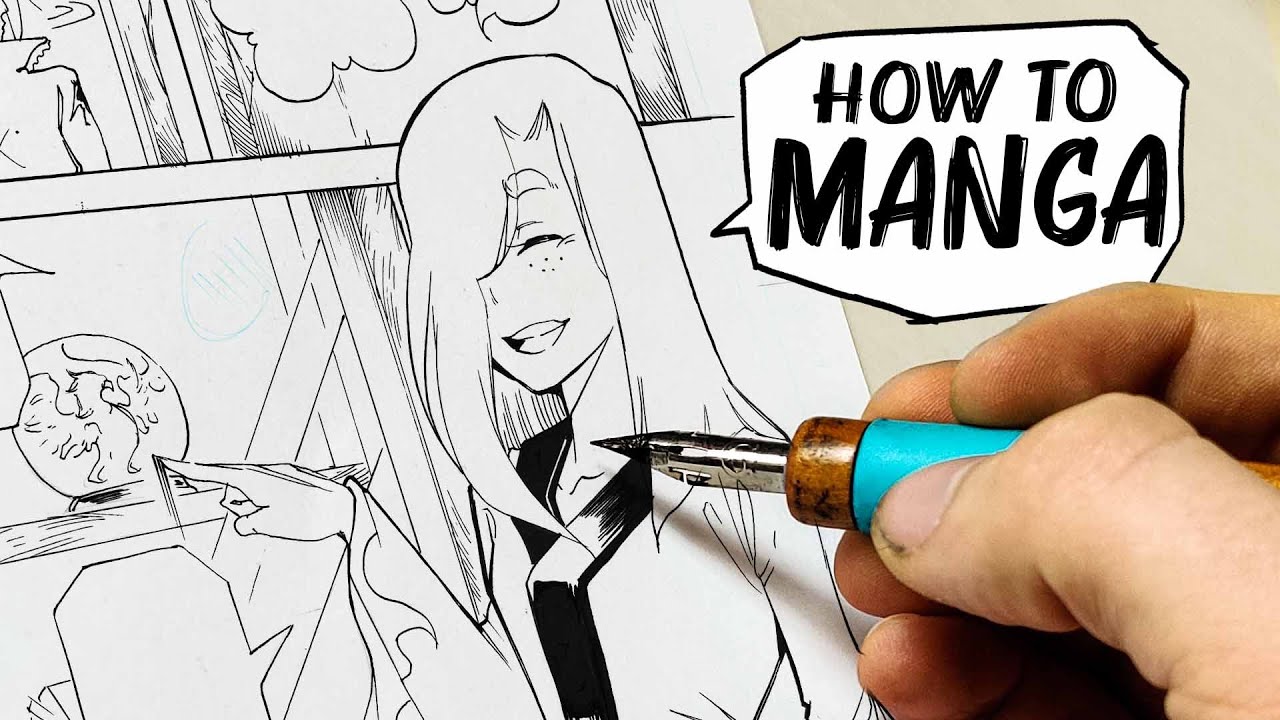
8. Inking Your Manga Page

Inking defines your final look.

Use:

  • Dip pens (traditional method)
  • Technical pens
  • Brush pens
  • Digital tools (Clip Studio Paint is popular among manga artists)

Line Weight Matters

Thicker lines:

  • Foreground objects
  • Characters
  • Important elements

Thinner lines:

  • Background details
  • Subtle textures

Good line variation creates depth.


9. Add Screentones and Effects

Screentones are essential in black-and-white manga.

They:

  • Create shadows
  • Add texture
  • Separate foreground from background
  • Establish mood

Modern artists often apply digital screentones, while traditional artists cut and paste tone sheets manually.

Effects to Include:

  • Speed lines for motion
  • Impact bursts for punches or explosions
  • Glow effects for energy attacks
  • Emotional symbols (veins, sweat drops, shadow lines)

These visual tools are part of manga’s storytelling language.


10. Lettering and Speech Bubbles

Dialogue must be readable and well-placed.

Tips:

  • Keep text centered in the balloon.
  • Avoid covering important art.
  • Make sure reading order is clear.
  • Leave enough margin space.

In emotional scenes, balloon shapes can change:

  • Jagged edges for shouting
  • Thin shaky outlines for fear
  • Black balloons for ominous dialogue

11. Balance Action and Emotion

A great manga page doesn’t just show movement — it shows feeling.

Compare emotional storytelling in series like Naruto versus psychological tension in Death Note. Both use close-ups, silence, and pacing differently.

Action pages rely on:

  • Diagonal panel layouts
  • Speed lines
  • Foreshortening

Emotional pages rely on:

  • White space
  • Close-ups
  • Minimal backgrounds

Knowing when to slow down and when to explode the page with energy is key.


12. Review and Refine

Before finalizing your page, check:

  • Is the reading order clear?
  • Is anatomy consistent?
  • Are expressions strong?
  • Is the dialogue natural?
  • Are panels too crowded?
  • Does the page flow smoothly?

Flip your page horizontally (digitally) to catch drawing mistakes.


13. Traditional vs Digital Manga Creation

Traditional Pros:

  • Organic line quality
  • Hands-on feel
  • Authentic aesthetic

Digital Pros:

  • Easier corrections
  • Faster screentones
  • Layer control
  • Professional publishing compatibility

Most modern artists blend both methods.


14. Common Beginner Mistakes to Avoid

  • Too many panels on one page
  • Stiff poses
  • Overcrowded speech bubbles
  • Ignoring backgrounds entirely
  • Flat compositions (no depth)
  • Same camera angle in every panel

Variety is essential.


15. Practice Exercises to Improve

If you’re serious about improving:

  1. Redraw a manga page from your favorite series.
  2. Create a 3-panel emotional scene.
  3. Draw a silent action page with no dialogue.
  4. Limit yourself to 4 panels and tell a complete mini-story.
  5. Study professional layouts and analyze panel flow.

Consistency builds skill.


Final Thoughts: Think Like a Storyteller, Not Just an Artist

Drawing a manga page isn’t just about clean lines or cool characters. It’s about guiding the reader’s emotions panel by panel.

Every line, shadow, and speech bubble should serve the story.

Start simple. Focus on clarity. Build your storytelling confidence one page at a time.

If you keep practicing, studying professionals, and refining your page layouts, you’ll gradually develop your own visual voice — the most important quality of any manga creator.

Now grab your pencil and start your first page.

Web – www.epicheroes.com
Twitter @epicheroes
Insta @epicheroesuk
http://www.youtube.com/c/Epicheroes
https://amazon.co.uk/shop/epicheroes

https://www.epicheroes.com/how-to-draw-manga-female-body-proportions/


How to draw a Manga Page

About Zo